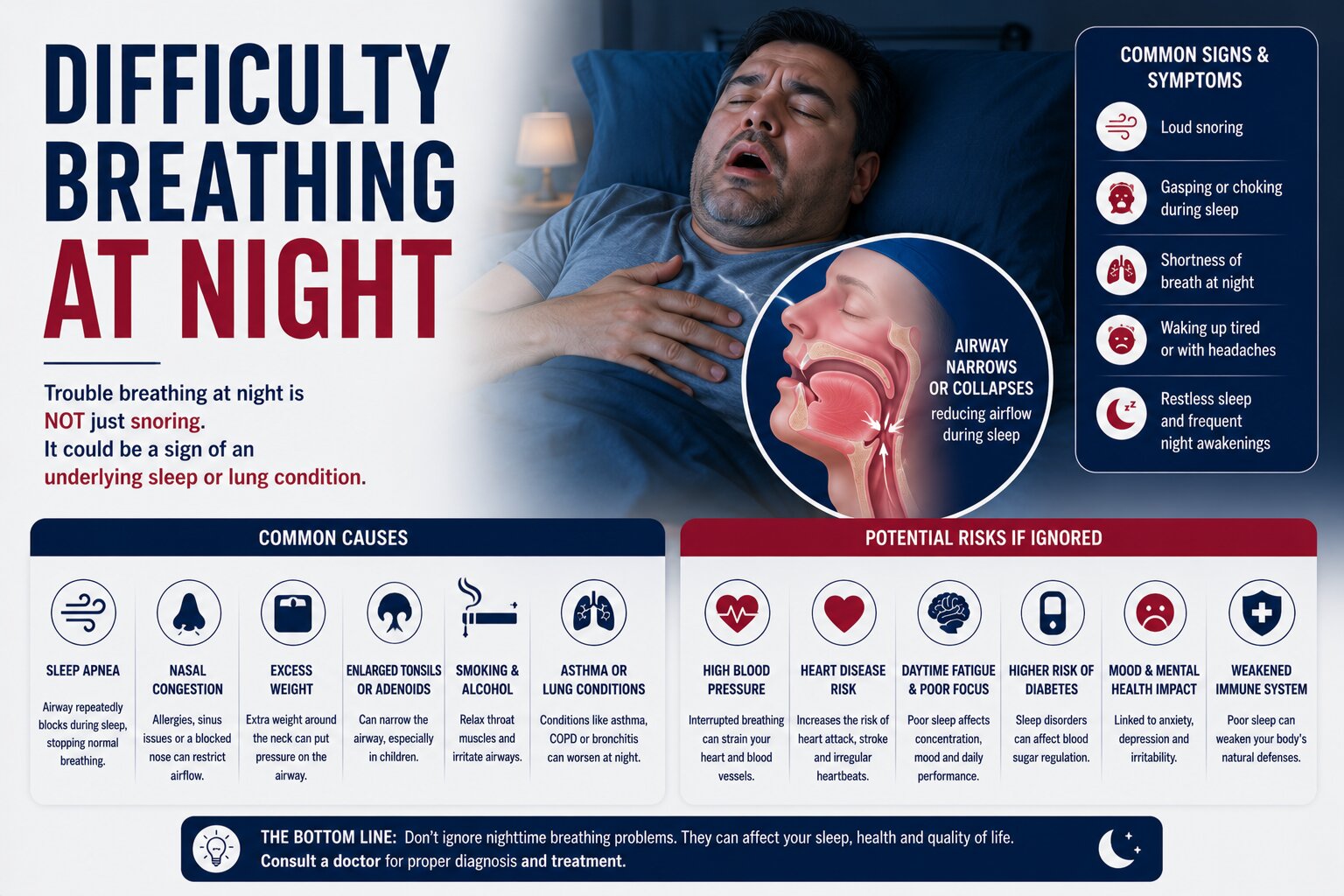
Difficulty breathing at night can come from several different causes, and the right response depends on which one is actually driving it. Sleep apnea is the most common, but heart conditions, airway problems, asthma, and anxiety can all produce nighttime breathing episodes that feel alarming and disrupt sleep. Getting the cause right is what determines the treatment.
This is what the main possibilities look like and how to tell them apart.
Why Breathing Changes During Sleep
Sleep changes how the body manages breathing. Muscle tone reduces throughout the body, including in the throat and chest wall. The brain's response to oxygen and carbon dioxide shifts. Breathing slows and becomes shallower. These changes are normal.
But in some people, these same shifts create conditions where breathing becomes genuinely difficult, restricted, or interrupted. The person wakes suddenly. Sometimes gasping. Sometimes with a sense of pressure on the chest. Sometimes with no clear memory of what woke them, just an awareness that something felt wrong.
That experience needs investigating. Not because every episode is dangerous, but because some causes are, and because living with disturbed breathing at night whatever the reason affects health over time.
Sleep Apnea: The Most Common Cause
Obstructive sleep apnea is the most frequent cause of nighttime breathing difficulty seen in sleep medicine practice.
The mechanics are straightforward. During sleep, the muscles holding the throat open relax too far. The airway narrows or closes. Breathing stops. Oxygen levels in the blood drop. The brain triggers a partial arousal to restore normal breathing. The person may wake gasping, or may simply shift position and resume sleep without full awareness of what happened.
This cycle can repeat many times each hour in moderate to severe cases. Over a full night, the cumulative effect on oxygen levels, heart rate, and sleep quality is significant.
Many patients with sleep apnea don't describe waking with dramatic breathing episodes. They just feel persistently tired. Waking unrefreshed. Morning headaches. Difficulty concentrating. A partner who has noticed loud snoring or pauses in breathing is often the first to flag that something is wrong.
But some patients do wake with a clear sense of gasping or struggling for air. That specific pattern waking suddenly, catching the breath, then settling is worth mentioning to a sleep specialist. It's one of the more direct presentations of obstructive sleep apnea.
A home sleep test or overnight sleep study can confirm whether sleep apnea is present and how severe it is. If you haven't had this checked and nighttime breathing episodes are happening, this is the right starting point.
Heart-Related Breathing Difficulty at Night
Not all nighttime breathlessness comes from the airway. Sometimes it comes from the heart.
Two patterns are particularly associated with heart conditions.
Orthopnoea is breathlessness that occurs when lying flat. People with this find they need to prop themselves up on multiple pillows to breathe comfortably. The mechanism involves fluid redistribution when lying down, fluid that accumulates in the legs during the day shifts toward the chest and lungs, increasing the work of breathing.
Paroxysmal nocturnal dyspnoea is more sudden. The person wakes abruptly, often an hour or two after falling asleep, with intense breathlessness. They typically need to sit upright or stand by a window to feel better. It may take twenty minutes or more to fully settle. This pattern is closely associated with heart failure and shouldn't be dismissed as anxiety or a bad dream.
Both of these are different from the typical sleep apnea pattern, though overlap can occur. People with heart failure can develop a specific form of central sleep apnea where the brain's breathing control becomes unstable, producing cyclical breathing changes through the night. This requires careful assessment because the treatment differs from standard obstructive sleep apnea management.
If breathing difficulty at night is accompanied by leg swelling, reduced ability to exercise, waking with breathlessness that takes a long time to settle, or a history of heart disease, cardiac causes need to be evaluated. This involves both a cardiac assessment and a sleep evaluation.
Asthma and Breathing Problems at Night
Asthma symptoms are often worse at night and in the early morning hours. The reasons include natural changes in airway inflammation, shifts in hormone levels, increased exposure to dust mites in bedding, and the effect of cooler overnight temperatures on the airways.
Nocturnal asthma can produce coughing, wheezing, chest tightness, and shortness of breath that disrupts sleep or wakes the person completely. It's sometimes mistaken for sleep apnea, particularly when the main symptom is waking with breathing difficulty.
The distinction matters because the treatments are different. Asthma is managed with inhaled medications targeting airway inflammation and bronchospasm. CPAP therapy for sleep apnea won't help asthma symptoms.
Some patients have both conditions. When nighttime breathing symptoms persist despite treatment for one, the other should be investigated. Both asthma and sleep apnea can worsen each other's effects, and managing them together produces better outcomes than treating either in isolation.
Laryngospasm: A Less Common But Frightening Cause
Laryngospasm is a sudden, involuntary tightening of the vocal cords that briefly closes the upper airway. When it happens during sleep, the person wakes suddenly with a sensation of choking or being unable to breathe in. It can feel terrifying. Most episodes resolve within seconds to a minute, but the experience is alarming enough that many patients seek urgent care the first time it happens.
The cause isn't always clear. Acid reflux is a recognised trigger stomach acid reaching the throat during sleep can provoke vocal cord spasm. Stress and anxiety can be contributing factors. In some cases no clear trigger is identified.
Laryngospasm episodes are typically brief and self-resolving. The person can usually breathe again within a short time, and the sensation passes completely. That pattern of sudden severe difficulty followed by rapid resolution is different from the gradual breathlessness of heart failure or the repeated brief arousals of sleep apnea.
If this is happening regularly, investigation to identify triggers is worthwhile. Managing acid reflux, where present, often reduces episode frequency. A pulmonology assessment can help distinguish laryngospasm from other causes of nocturnal breathing difficulty.
Anxiety and Panic Attacks During Sleep
Anxiety-related breathing episodes during sleep are real and more common than people expect.
Nocturnal panic attacks can produce sudden waking with heart racing, difficulty breathing, chest tightness, and a sense of intense fear or impending danger. They feel physically real because they are. The body's stress response fires during sleep without an obvious external trigger.
These episodes tend to be clearly frightening from the moment of waking. They may be accompanied by sweating, trembling, or a strong urge to escape the bedroom. They typically ease over fifteen to thirty minutes.
Distinguishing anxiety from cardiac or respiratory causes requires assessment. Anxiety shouldn't be the assumed explanation for nighttime breathing episodes without other causes being excluded first. Sleep apnea in particular can worsen anxiety, and addressing the sleep disorder sometimes reduces the frequency of what appeared to be anxiety episodes.
What the Assessment Process Involves
When patients come to Dr. Syed Arshad Husain with nighttime breathing difficulties, the assessment covers the full picture.
The consultation reviews the exact nature of the episodes. When they happen in the night. What the person experiences on waking. How long episodes last. Whether symptoms settle quickly or slowly. Whether a partner has observed anything. Associated symptoms during the day.
Medical history is reviewed in full. Heart conditions, asthma history, acid reflux, anxiety, and current medications are all relevant. Sleep quality, daytime energy levels, and any pattern of snoring are specifically asked about.
Where sleep apnea is suspected, a home sleep test or full overnight sleep study is arranged. Where cardiac causes are possible, appropriate investigations are coordinated. Where asthma is involved, respiratory function testing and review of current management are part of the process.
The goal is an accurate diagnosis. Not a single assumed cause applied to everyone who wakes struggling to breathe. Different causes need different treatment, and the right approach starts with understanding which one is actually present.
Key Takeaways
- Difficulty breathing at night has multiple possible causes including sleep apnea, heart failure, asthma, laryngospasm, and anxiety-related episodes.
- Sleep apnea is the most common cause seen in sleep medicine practice. It often presents as waking gasping, chronic morning fatigue, and snoring noticed by a partner.
- Heart-related breathing difficulty, particularly waking with severe breathlessness that takes time to settle needs cardiac evaluation alongside sleep assessment.
- Asthma symptoms are typically worse at night and produce coughing, wheezing, and chest tightness distinct from sleep apnea.
- Laryngospasm produces sudden brief choking episodes that resolve quickly and are often linked to acid reflux.
- Accurate diagnosis determines the right treatment. These conditions can coexist, and a thorough assessment covers all possibilities rather than defaulting to one explanation.